

Materialz and the University of Twente are developing a non-toxic, fully recyclable radar-absorbing coating.
The coating is designed to make objects less visible to radar whilst also being able to withstand extreme conditions (heat-resistant up to 1,400 °C) and corrosion.
Researchers are trying to determine why PMT materials absorb radar signals and how this property can be optimised.
The technology is initially focused on maritime applications and could reduce Europe’s dependence on non-European suppliers.
Materialz aims to licence the knowledge and technology for industrial mass production and for the further development of expertise in radar absorption.
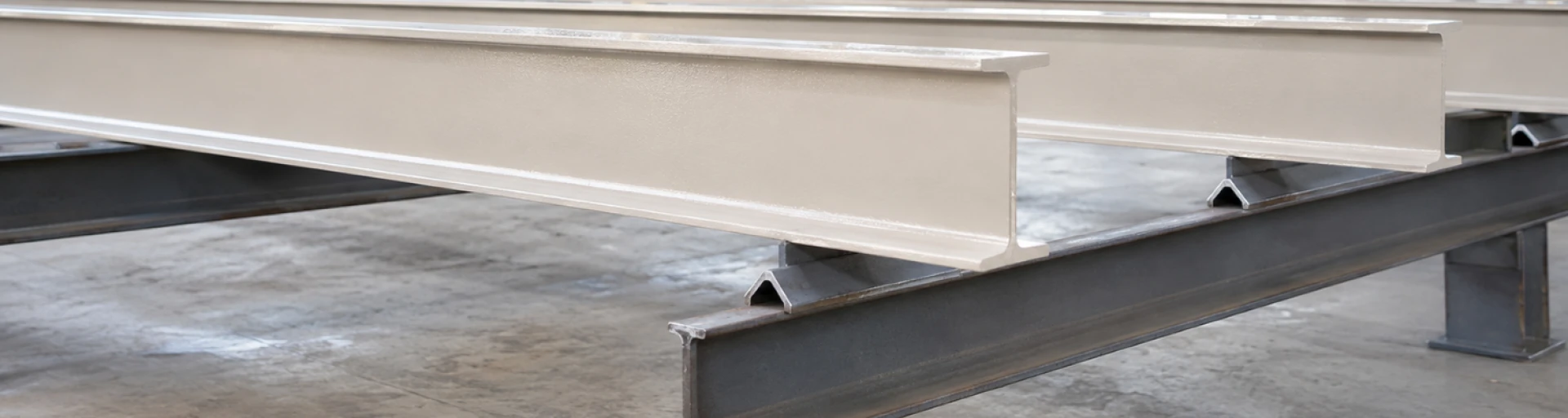
New recyclable coating makes objects invisible to radar
27 August 2026
The concept of ‘staying under the radar’ is taking on a new meaning by applying a special coating to objects that absorbs radar signals. The defence industry is very interested in such materials. In the RAM project, the Dutch company Materialz and the University of Twente are collaborating on the development of a completely new type of radar-absorbing coating with very strong properties, which is non-toxic and fully recyclable. This project is a follow-up to one of the twelve proposals selected from the first SME Defence call for innovative projects, focusing on dual-use applications.
In this first SME Defence call, Holland High Tech is challenging high-tech entrepreneurs to work in collaboration with research organisations for two years on innovative dual-use projects in the NLD areas of Space, Quantum and Smart Materials from the Defence Strategy for Industry and Innovation 2025–2029. The aim of this call is to connect more high-tech SMEs with the Ministry of Defence’s innovation contracts, and it is funded by the Ministry of Economic Affairs and Climate Policy and the Ministry of Defence. This article is the fourth in a series of articles on the impact of innovation supported by Holland High Tech.
* Source photo: Materialz
In modern warfare, a new situation has arisen in which drones and autonomous missiles play a key role. As a result, the ability to manoeuvre undetected has become increasingly important. For some time now, the most advanced military aircraft have been fitted with a special coating that makes them virtually undetectable by radar. Ships, vehicles and weapon systems must also be treated with this coating to remain invisible.
The disadvantage of the current generation of radar-absorbing coatings is that they are highly harmful to the environment and to human health due to the presence of toxic and carcinogenic components. Furthermore, the European defence sector is dependent on non-European suppliers for these coatings.
A fine example of serendipity
The Innovative Geopolymer-based Radar Absorbing Coatings (RAM) project aims to change that. The foundations for this were laid by Materialz, a start-up that developed a new technology called Polycondensed Mineral Technology (PMT). Chemist and entrepreneur Ingmar Richartz discovered the new technology by chance in 2015, explains Karel Smeets, Director of Strategic Partnerships & Growth at Materialz. “There were some residues left on a spatula from an experiment with minerals. A layer of minerals – essentially rock – usually breaks when you bend it, but this material turned out to be very flexible and resistant to acids and fire. In fact, it could only be removed by sanding.”
During tests carried out in the years that followed, the new material withstood high temperatures of up to 1,400 °C and was also found to offer good protection against corrosion. These are properties that are particularly useful when dealing with metals intended for use under extreme conditions. Some of these coatings also absorbed radio waves in the frequency range used by radar systems.
Turn various knobs and then take a measurement
The aim of the two-year project, funded under the Holland High Tech SME Defence call, is to optimise this radar-absorbing property. Smeets: “Our hypothesis is that the radar signals become trapped within the geometry of the bonds we form with PMT at the molecular level. How we can influence this is actually fundamental research.”
To this end, contact has been established with the research group led by Matthijn de Rooij, professor of tribology and surface technology at the University of Twente. He investigates the interaction between surfaces that move relative to one another. Friction, wear and lubrication are the key aspects of this research, but the techniques from this field can also be used to analyse the interaction between radio waves and surfaces. “We have observed that some PMT materials absorb radar signals, but we do not yet know why. Once we understand this, we can also take the next step towards optimisation.” De Rooij also has a Lifetime Performance Lab and techniques for predicting the expected service life of materials.
“We have observed that some PMT materials absorb radar signals, but we do not yet know why.”
Matthijn de Rooij, Professor of Tribology and Surface Technology, University of Twente
Focus on maritime applications
Materialz is focusing primarily on maritime applications in its ongoing development of the coating’s radar-absorbing properties. The company has had long-standing contacts with shipyards and port authorities regarding the development of anti-corrosion coatings. The use of the radar-absorbing coating in the aviation sector is not a priority, as this involves additional requirements for the coating. For example, the coating must be able to withstand extremely low temperatures of up to minus 50 °C. Smeets: “The lowest temperature at which we have tested so far is minus 5 °C. That went well, but we want to thoroughly test the radar-absorbing capability first before we start working on more complex operating conditions.”
“We want to thoroughly test the radar-absorbing capacity first before we start working on more complex operating conditions.”
Karel Smeets, Director of Strategic Partnerships & Growth at Materialz
The researchers can adjust various parameters to alter the properties of PMT materials. Based on the literature and their own measurement results, De Rooij’s group has already selected some promising modifications. “That does present some challenges, because naturally you want to retain the material’s other properties,” says De Rooij.
Through an iterative process in which Materialz develops new PMT variants and De Rooij’s team carries out the analyses, the partners aim to have an optimal coating at laboratory scale by 2028.
Non-toxic and highly reusable
After that, a number of further steps are required before a product suitable for practical use is achieved. Whilst it is true that real-world usage conditions can be recreated in the lab, Smeets knows from experience that these tests offer no guarantee as to how the coating will behave in an actual application. Extensive field trials must therefore follow. The ease of application is also a key factor in ensuring the coating’s widespread adoption. If the coating process takes too long or is labour-intensive, using the material is not cost-effective. Furthermore, it must be possible to produce the coating at scale.
Materials that can withstand extreme conditions are not usually very environmentally friendly. This would seem to contradict the eco-friendly ethos that Materialz strives for. Nevertheless, all PMT coatings are fully recyclable, says Smeets. “The end product is essentially a type of rock, so comparable to sand or pebbles. If you remove the coating from a piece of steel, we can grind it down and fully reprocess it into a new product. It can also be disposed of as clean rubble and used as a filler, for example in concrete.” Unlike traditional radar-absorbing coatings, the material contains no toxic components, microplastics or volatile organic compounds. The raw materials include minerals that are extracted entirely within Europe. The development of this technology and the resulting end products therefore make European industry less dependent on non-European suppliers.
“If you remove the coating from a piece of steel, we can grind it down and fully reprocess it into a new product.”
Karel Smeets, Director of Strategic Partnerships & Growth at Materialz
Opportunities for Dutch industry
Materialz can produce the new material in-house, but in the long term, Smeets anticipates that PMT products will be manufactured under licence by other companies. “The possibilities that PMT offers for manufacturing high-quality, sustainable products are far too diverse for us to handle on our own. We are currently producing a coating, but it can also be used to manufacture sheet material and even mechanical components.” In addition, he sees particular potential for an economic spin-off in the Netherlands based on the new knowledge regarding radar absorption. “This really involves further developing the technology, but also preparing production for the use of the new technology and scaling it up.”
Previous articles in the series:
More news
26 October 2026
Government presents MedTech 2035 policy agenda: the Netherlands aims to have the strongest MedTech ecosystem in Europe
26 October 2026
AIMIRA can help surgeons operate with greater precision using a digital twin of the patient

26 October 2026
Quantum technology: new TechBridge call for collaboration with the United Kingdom