Holland High Tech Holland High Tech

RECAP Holland High Tech NETWORKING EVENT 2026

Ignite Innovation: Accelerating Dutch High Tech

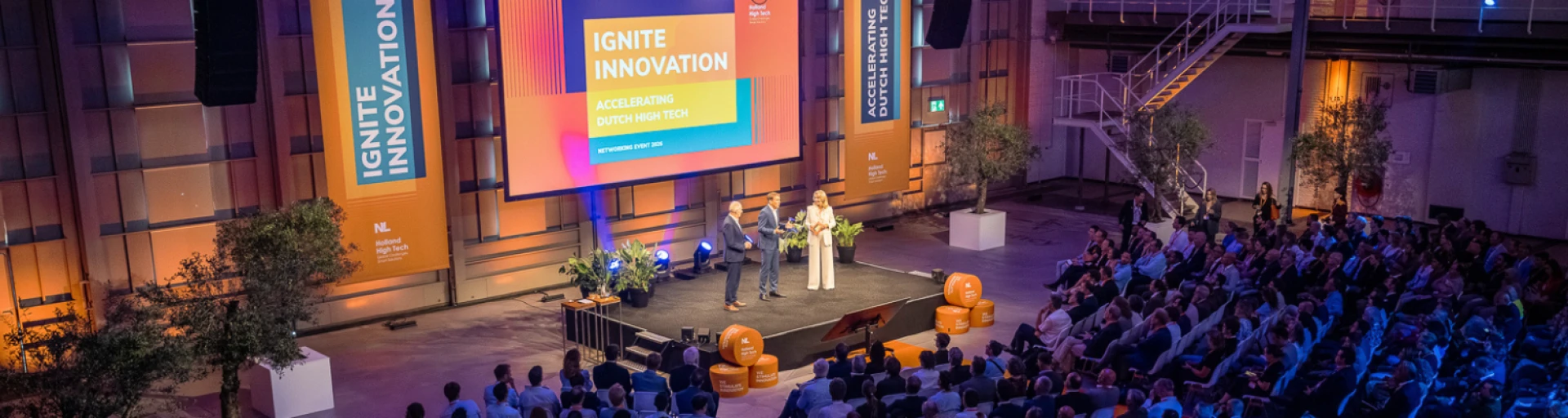
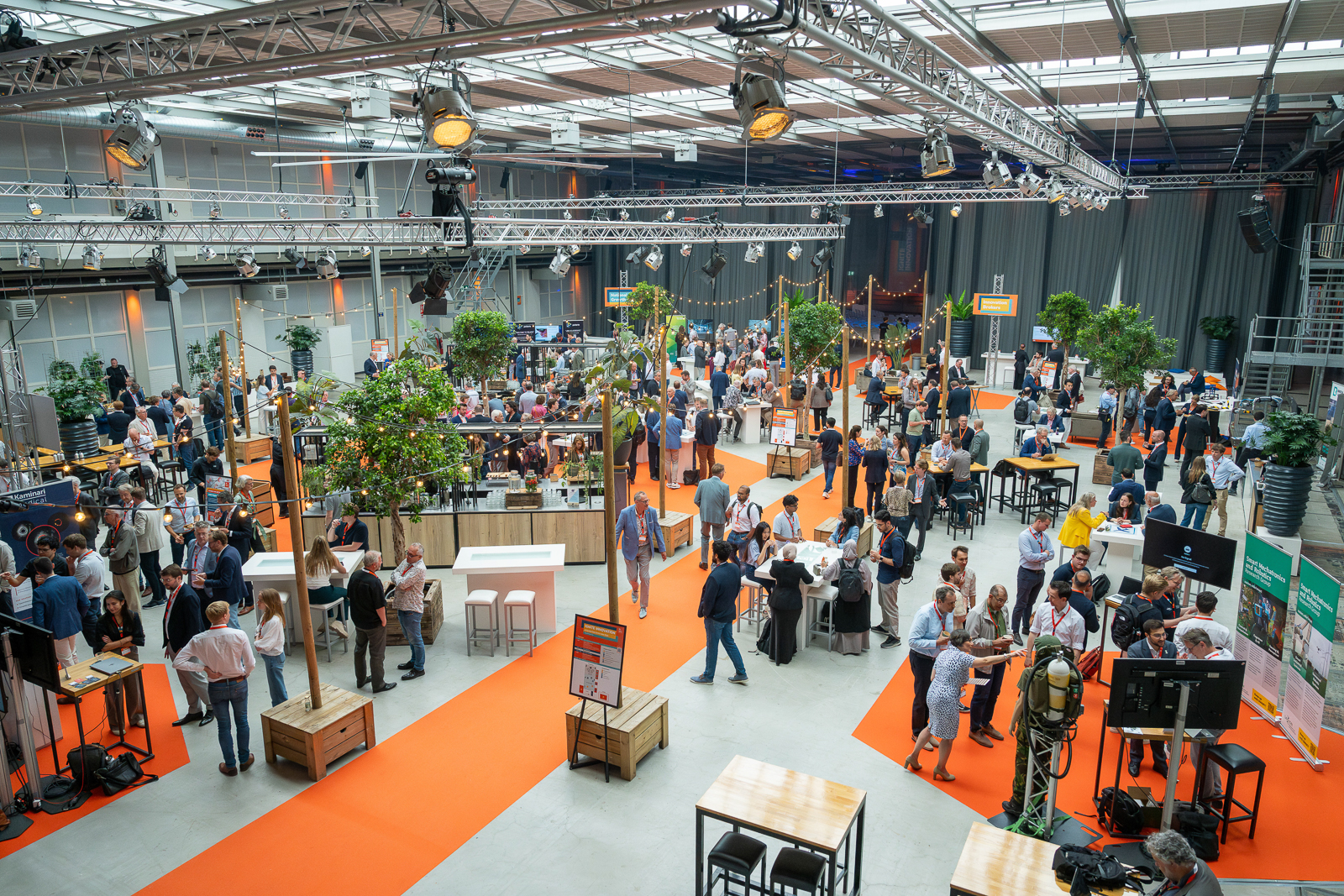
On June 17th, innovators, industry partners, policymakers and defence representatives came together at the Fokker Terminal in The Hague for the Holland High Tech NETWORKING EVENT 2026. Under the theme Ignite Innovation: Accelerating Dutch High Tech, the day made one thing clear: technology is no longer a choice, but a foundation for resilience, autonomy and sustainable growth. From cognitive robotics and semiconductors to defence innovation and the future of compute, the programme reflected both the ambition and the urgency of the moment. The question is no longer whether the Netherlands must accelerate, but whether we will succeed in converting that energy into production, cooperation and strategic strength.

Aftermovie

Watch the highlights of the NETWORKING EVENT 2026, where industry, knowledge institutions and government came together to ignite innovation in the Dutch high-tech ecosystem.

Status Quo | Peter Stolk & Leo Warmerdam

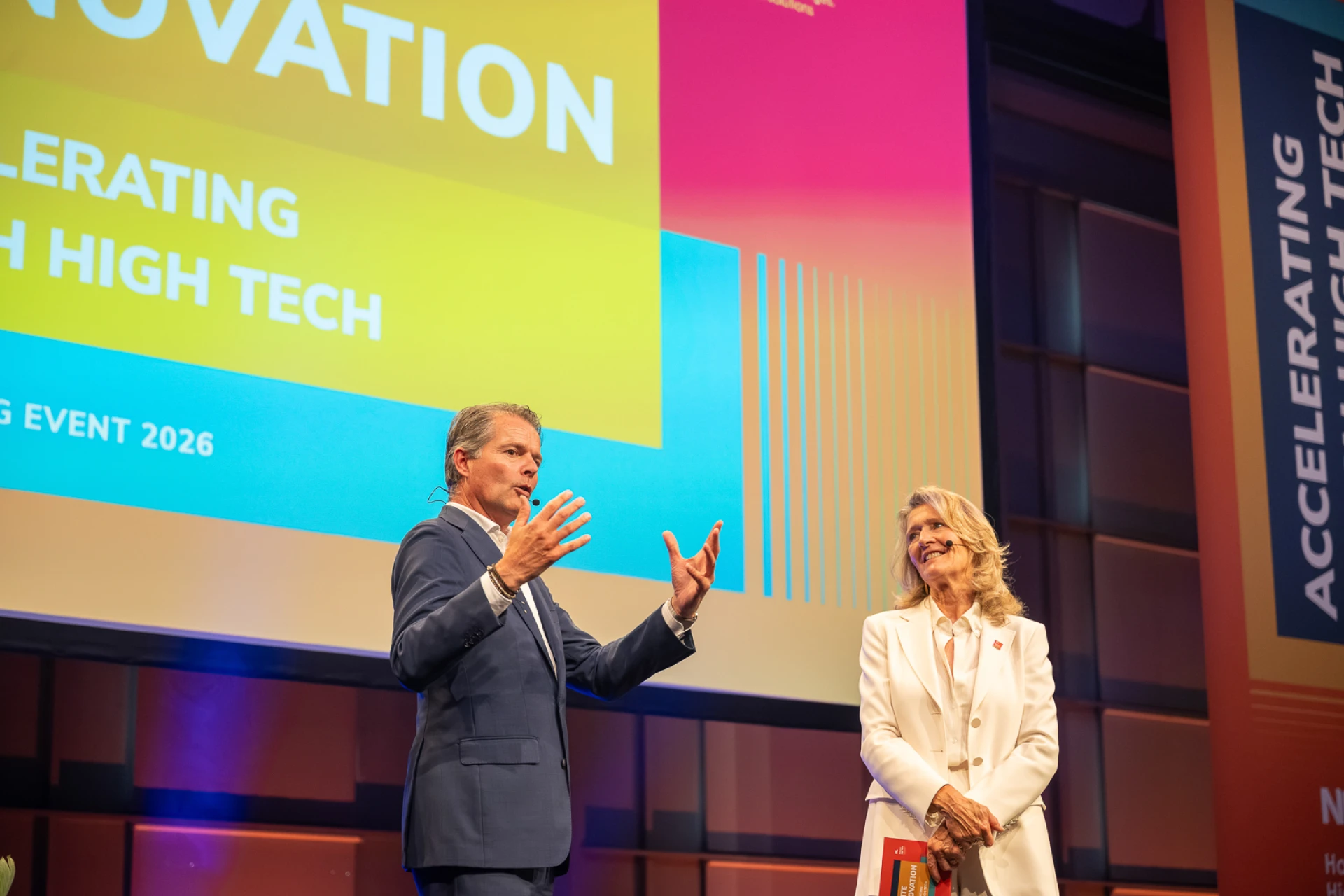
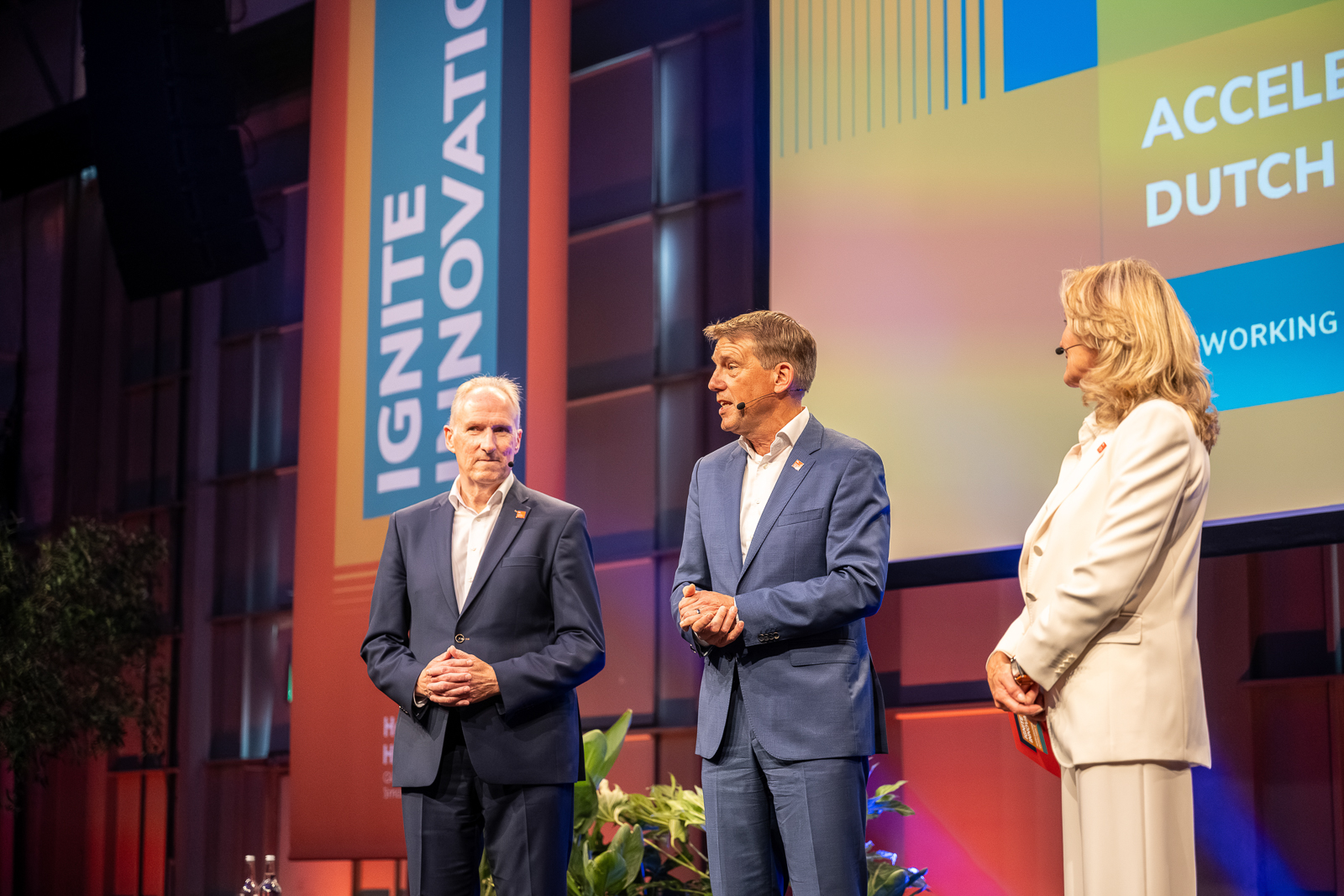
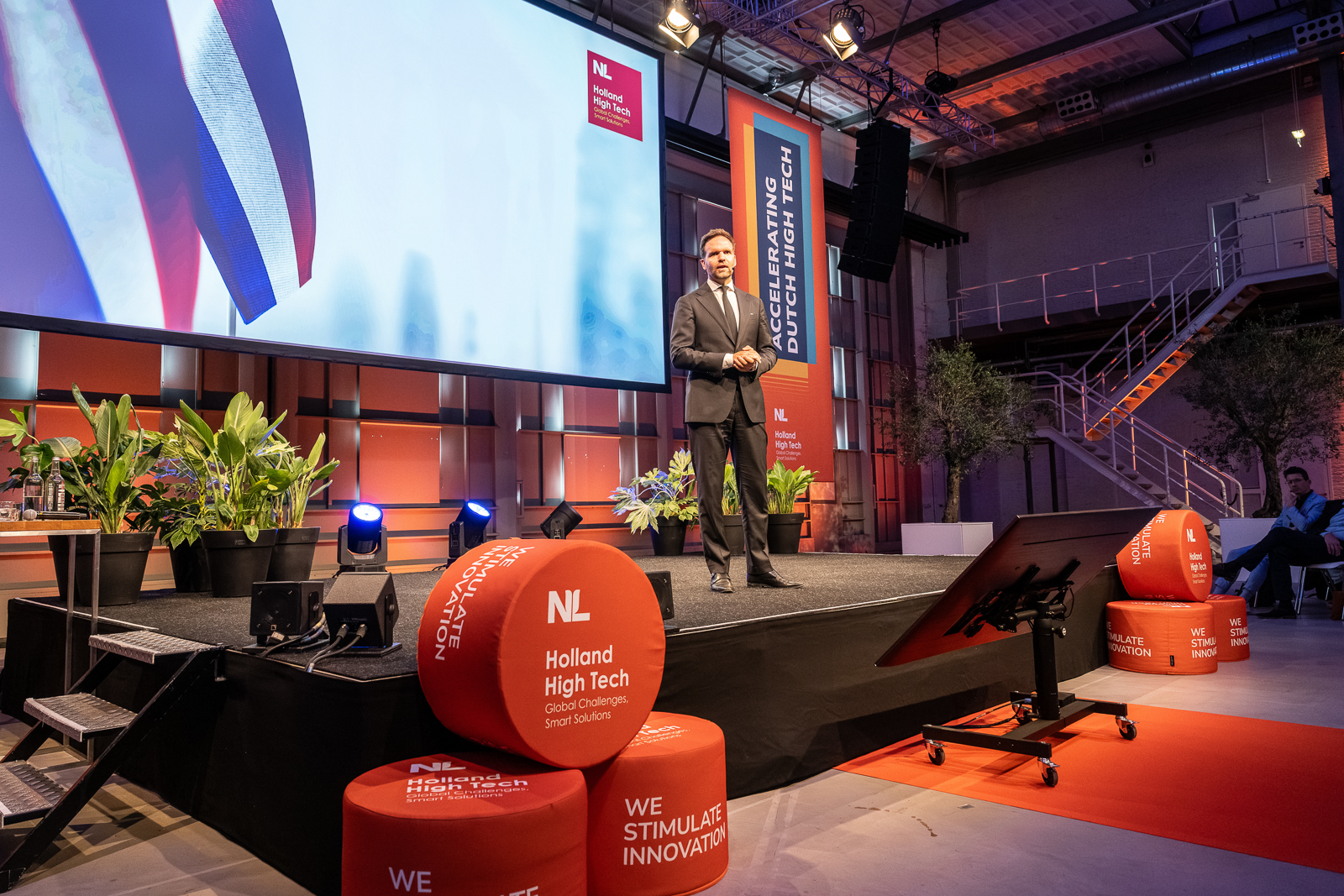
Holland High Tech Chairman Peter Stolk and Executive Director Leo Warmerdam opened the day by reflecting on the state of the Dutch high-tech ecosystem. Stolk noted that a major step has been taken by the Dutch government towards embracing the knowledge and innovation economy, with the National Technology Strategy, the industrial policy agenda and the strategic markets now providing clear direction. He specified that this is ongoing and of the utmost importance.

"The National Technology Strategy, the industrial policy agenda and the strategic markets provide direction to a landscape in which Holland High Tech is increasingly taking on the role of connector, programmer and adviser."

Warmerdam made that concrete: in 2025, Holland High Tech funded 168 projects with a total project volume of €87 million, about half of which came from subsidies and the other half from contributions by participating companies. He also pointed to the programme council that is now up and running, with eleven innovation domains closely linked to the National Technology Strategy (NTS).

"Public-private cooperation is no longer a side issue, but the way in which the Netherlands must organise its technological position. The Dutch high-tech industry knows that we need to build an international supply chain and have their customer base internationally."


Keynote | Lukas M. Ziegler

"I officially believe that AI needs a body. The perfect embodiment for AI are robots."

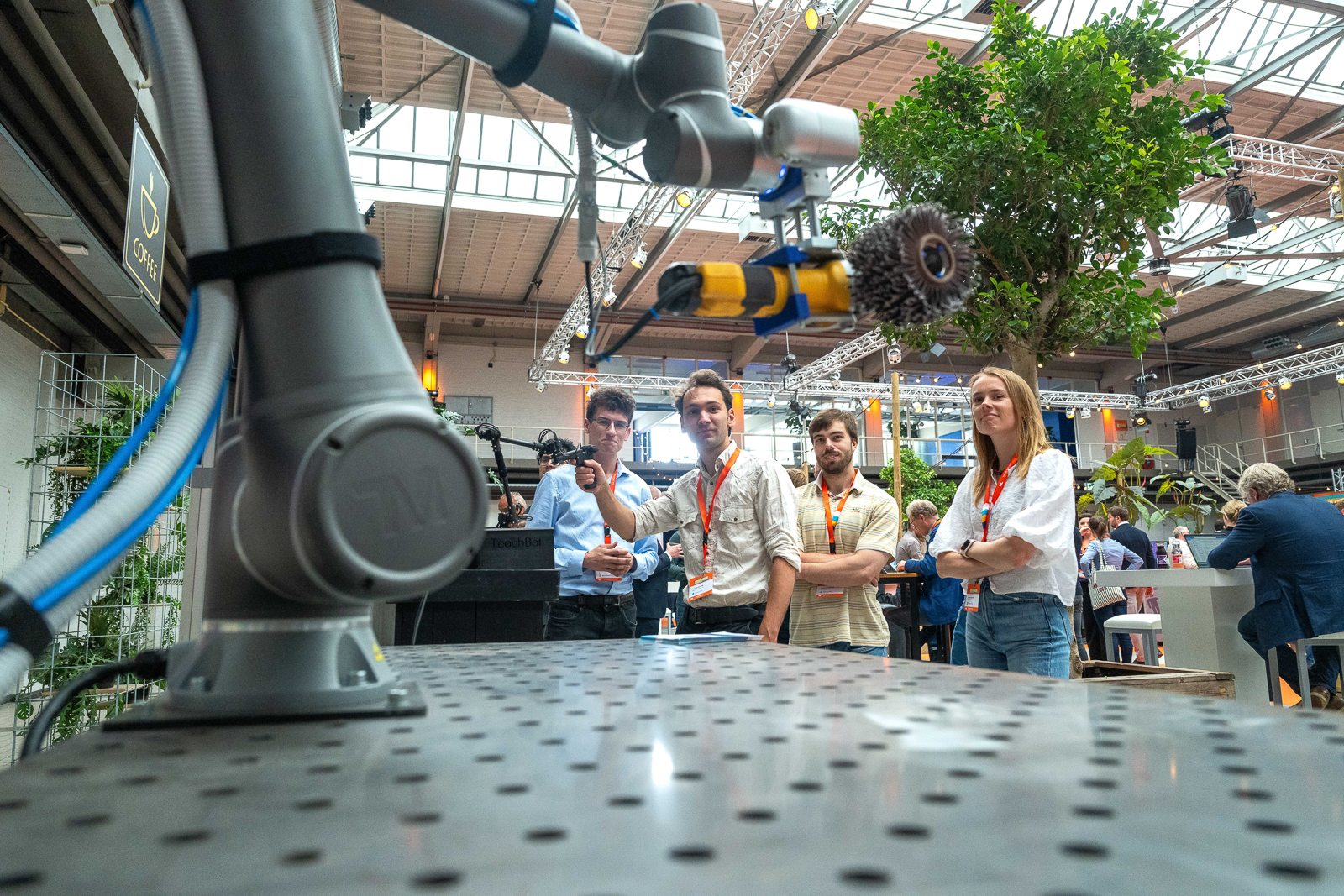
European robotics evangelist Lukas M. Ziegler placed cognitive robotics at the heart of the next industrial wave. AI has already changed the digital world and now it is getting a body. Physical AI is no longer a niche topic, but a field recognised by young engineers, investors and institutes as strategically decisive. Robots that can perceive, reason and adapt are no longer a distant future. As Ziegler said:

"We are no longer approaching Robotics 2.0 — we have entered a new era."

He linked this technological leap to three forces: ageing, labour shortages and the explosion of e-commerce. For the first time in history, labour is becoming a luxury: while consumers still expect their package delivered tomorrow. In that tension, robotics is not a gadget but a necessary engine for productivity. But, he also warned against hype:

"At the moment, there is still no logical business model available that would justify purchasing a batch of humanoid robots."

Interview | Cognitive Robotics for innovation in the Netherlands

"Let's recognise that robotics is a wide topic that requires a wide range of key enabling technologies."

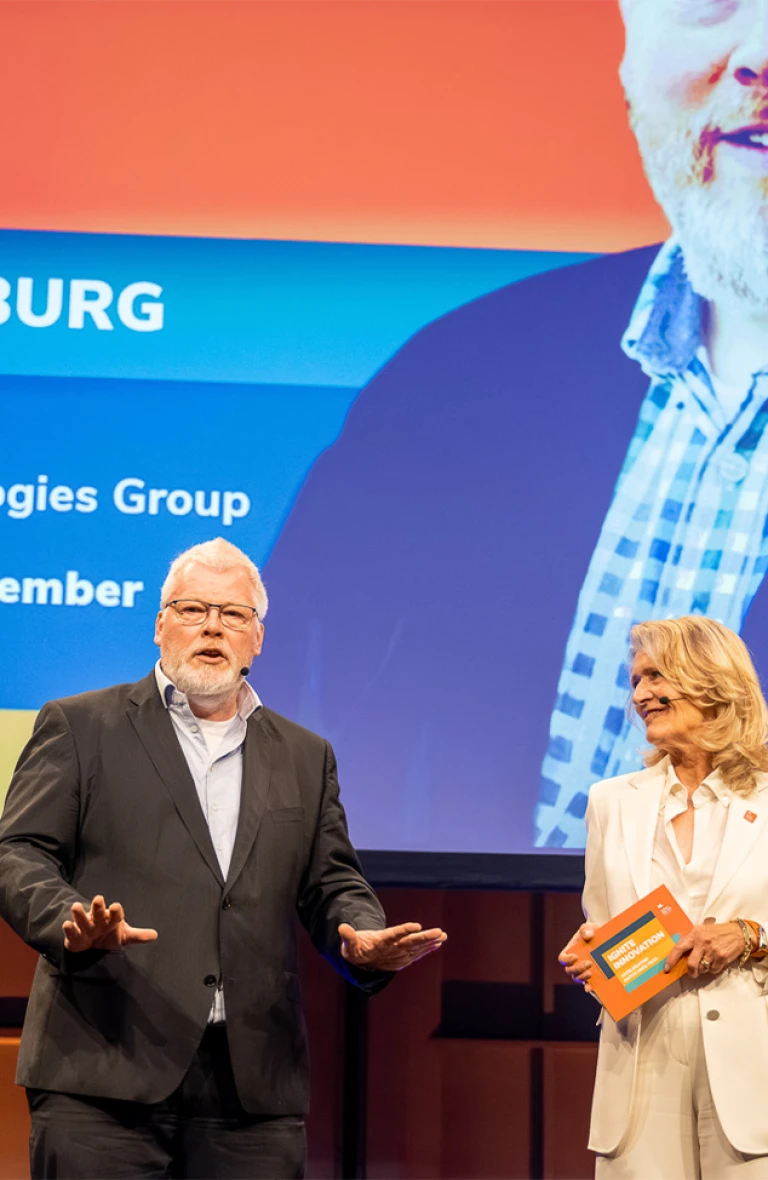
Ton Peijnenburg, CTO of VDL Enabling Technologies Group, added extra context to Ziegler's words. The great promise of cognitive robotics, he argued, lies in flexible automation. Where classical automation gets stuck at low volumes and difficult ROI, robots with recognition and learning capabilities can become far more widely deployable. But the real value, he stressed, lies in data and craftsmanship.

“There is an enormous amount of craftsmanship in our industries. If we want to automate that, we need to transfer that craftsmanship to robots; that makes craftsmanship an asset.”

Peijnenburg saw three routes for the Netherlands: applying robots in domestic industry, supplying components and production capacity for robotics, and building automation systems in which new types of robots can find their place. Holland High Tech, he argued, can take on the missing role of orchestrator, bringing together technology, application knowledge, chips, AI, sensors, data and production.

Interview | Building a future-proof economy

Tjerk Opmeer, Deputy Director-General for Business & Innovation at the Ministry of Economic Affairs & Climate Policy, placed the day's ambitions in a geopolitical context. The world is becoming more complex, with the rise of Asia, China's strategic position and shifting relations with the United States. Precisely for that reason, Europe and the Netherlands must make sharper choices. The Dutch high-tech position is strong, from fundamental research to system integration, from start-ups to major companies. But the question is where the Netherlands wants to be indispensable.

As the Netherlands, we have a very good position. We need to step up to make sure that we can keep competing in the in the coming future, and collaborate. We need to focus on where the difference can be made."

Breakout Sessions

Innovation in Security & Defence

The focus during this breakout was on accelerated dual-use ecosystems: how high-tech SMEs can contribute to defence innovation and European strategic autonomy. As Holland High Tech we introduced the new innovation domain: High-Tech Security. In addition, there is our strategic programme Security with €2.5 million in annual funding for three years, and the SME Defence Call 2025.

Carla Andela, responsible for space technology at Defence, showed how concrete that cooperation is becoming. Spaceflight is no longer a niche, but part of military and civil resilience. A range of factors plays a role in this: GPS disruption, space weather, space debris, and the protection of satellites require sensors, cyber technology, quantum technology, and launch capacity.

Charlotte Rugers, senior innovation manager COMMIT for quantum said the principle is: “Only quantum if it really makes a difference.” Quantum can be relevant for sensors, computing, networks and understanding new threats, but soldiers in the field have no use for technology for technology’s sake. It must work, be integrated into systems and contribute to a successful mission.

Jasper Heeren, Defence Innovation & Production Orchestrator for smart materials said. “Composites can save weight and provide protection; additive manufacturing can enable local production and reduce dependence on logistics chains; metamaterials can help make things less visible at radar, infrared or acoustic level.”

The three speakers from the ministery of Defence joined State Secretary for Defence in a panel moderated by Gerard van der Zon (Operational Director, Holland High Tech), where many subjects were touched upon during the questions from the large audience.

Panel:

  • Derk Boswijk | State Secretary for Defence, Ministry of Defence

  • Carla Andela | Policy Officer for Knowledge and Innovation (Space), Ministry of Defence

  • LKOL Jasper Heeren PhD MSc | Defence Innovation & Production Orchestrator (Smart Materials), Ministry of Defence

  • Charlotte Rugers | Senior Innovation Manager COMMIT (Quantum), Ministry of Defence
Computing our future

The Future of Compute represents a shift from traditional compute architectures with new paradigms. It includes quantum computing, advanced semiconductors, neuromorphic computing, and photonics. Data and AI, Advanced semiconductors, Integrated photonics, Quantum computing, Neuromorphic computing, HPC & AI infrastructure, Cybersecurity and Robotics.

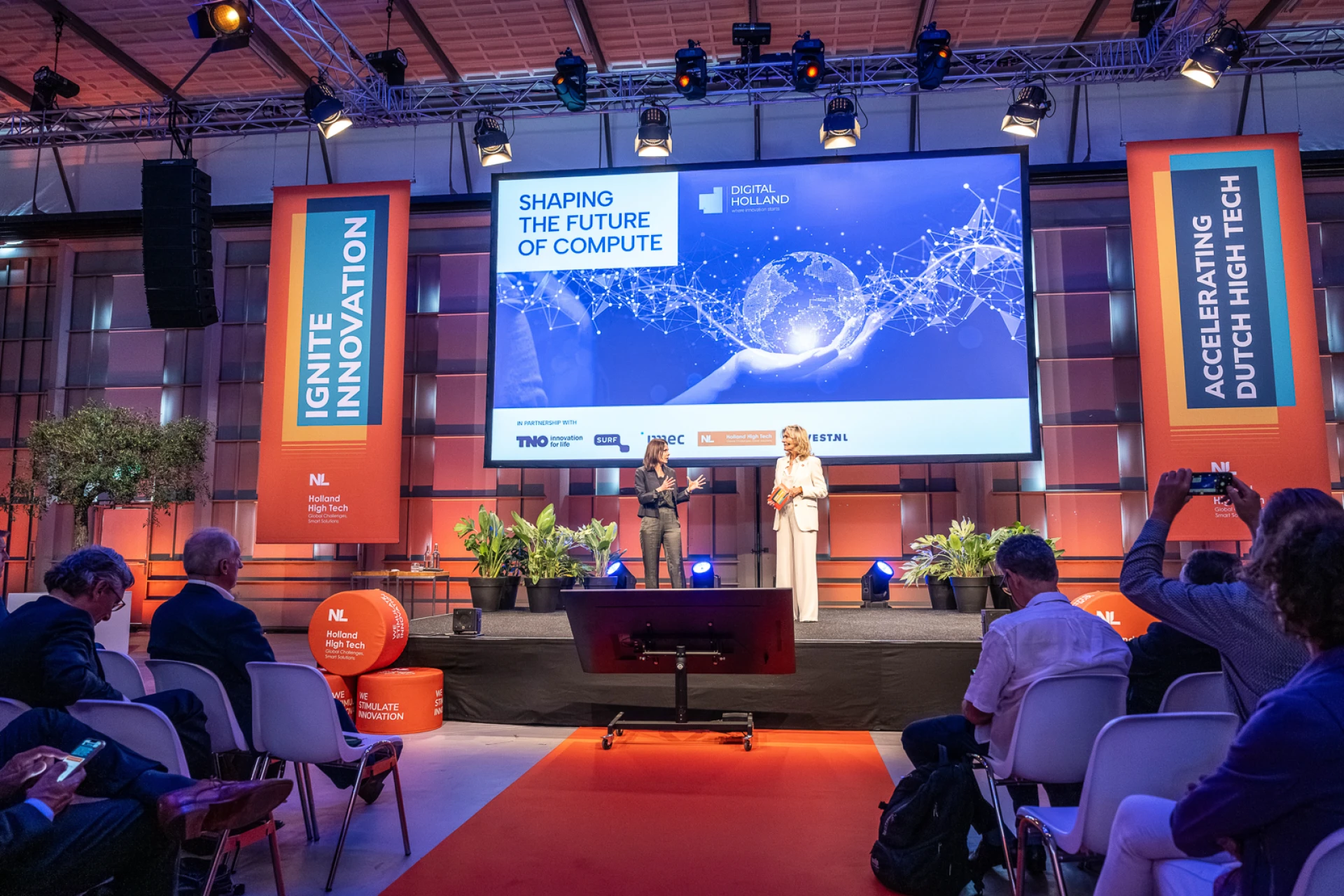
Freeke Heijman-te Paske made the case why compute is critical for our future. The Netherlands has to claim more strategic positions in the compute value chain. With ASML as a strong anchor, she pointed to 65 fast-growing companies active in quantum, integrated photonics, neuromorphic computing and HPC, and argued that the real challenge lies in scaling from lab to fab. The Netherlands has real capabilities, but they remain fragmented. A coherent national vision is now indispensable, as was stated in the Shaping the Future of Compute call to action last May.

She also related the current Holland High Tech research on the relevance of the Future of Compute for the high-tech, of which the results will follow later this year.

Speakers:

  • Freeke Heijman-te Paske | Vice President, QuIC for Qblox & Strategic Advisor, Holland High Tech

  • Lukas Kingma | Consultant in Quantum and Deeptech Innovation, Heijman Consultancy

Next steps in semicon

This breakout revolved around the Dutch semiconductor landscape in 2035. Speakers discussed the Semicon Vision 2035 and what it will take to get there. Concrete next steps, to fill in the long-term roadmap.

Speakers:

  • Arco Krijgsman | Head of Public Private Partnerships, ASML & Programme Council Member, Holland High Tech

  • Peter Stolk | Chairman, Holland High Tech | Chairman Key Enabling Technologies

  • Núria Barceló i Peiró | Public Cooperation Programs - Program Manager, NXP Semiconductors

  • Richard Visee | CEO, Systematic Design

Next steps in cognitive robotics

The session addressed both the technological challenges and the practical steps needed to move cognitive robotics from pilot to production, and discussed how the Netherlands can strengthen its position in this domain by bringing together technology, application knowledge and industrial capacity.

Speakers:

  • Ton Peijnenburg | CTO, VDL Enabling Technologies Group & Programme Council Member, Holland High Tech

  • Albert Maas | CEO & Founder, Avular

  • Erik Koehorst | Program Manager Public-Private Partnerships, Philips Drachten

  • Gerard Ramaker | Business Development Manager, AWL-Techniek

National Technology Strategy: Action Agendas & Innovation Coalitions

This breakout revolved around how action agendas and innovation coalitions translate strategy into impact. Speakers provided updates on the progress made and discussed what it takes to keep momentum going from policy frameworks all the way through to concrete projects and results.

Speakers:

  • Leo Warmerdam | Executive Director, Holland High Tech

  • Miekee Lam | Senior Policy Officer PPP & High Tech, Ministry of Economic Affairs & Climate Policy

  • Yvette Tuin | Head Innovation Program KIC, NWO

  • Julian Rabbie | Quantum Technology Strategist, TNO

  • Wilbert IJzerman | Head of Sector Lighting Technology, Signify & Programme Council Member, Holland High Tech

Circular Economy in Hightech

This breakout revolved around embedding circularity in high-tech systems. With practical cases on how circularity can be built into high-tech value chains through collaboration and innovation, specifically aimed at high-tech SMEs.

Speakers:

  • Hans van der Weijde | Director Strategy, Programmes and External Collaborations, Tata Steel & Programme Council Member, Holland High Tech

  • Esther Kersten | Founder and CEO, ImpactX & Board Member, Holland High Tech

  • Tim Maaskant | Project Manager Manufacturing Services & Logistic Automation, Prodrive Technologies


Interview | Computing our Future

Freeke Heijman-te Paske, Vice President of QuIC for Qblox and Strategic Advisor at Holland High Tech, opened the second plenary by making the case for the Netherlands to act on its compute strengths with the Future of Compute. The Future of Compute represents a shift from traditional compute architectures with new paradigms. It includes quantum computing, advanced semiconductors, neuromorphic computing, and photonics. Data and AI, Advanced semiconductors, Integrated photonics, Quantum computing, Neuromorphic computing, HPC & AI infrastructure, Cybersecurity and Robotics.

She made the case why compute is critical for our future. The demand for computing power is growing faster than Moore's Law can keep up with, and with it, the pressure to innovate in quantum, advanced semiconductors, neuromorphic computing and photonics. But the Netherlands, she argued, has more to offer than it often realises: a cohort of 65 fast-growing companies in this domain, attracting 30% of all deep tech capital in the Netherlands.

"We have something special here. We have a compute powerhouse in the Netherlands. We should be proud of it, talk about it more, and show it to the rest of the world."

The bottleneck, she stressed, is not the ambition but the execution. Policy is well-suited for startups and scale-ups, but the step from lab to fab requires more. Her call to the community was pragmatic: stop writing papers that end up in a drawer, break down walls between initiatives, and connect what already exists. She also related the current Holland High Tech research on the relevance of the Future of Compute for the high-tech, of which the results will follow later this year.

Speech | Innovation in Security & Defence

"When it comes to defence, the most dangerous thing you can do is play it safe."

State Secretary for Defence Derk Boswijk took to the stage and talked about the challenges of innovation. Boswijk placed the biggest innovation challenge not with a new type of drone or tank, but with collaboration. In doing so, government must learn to accept that not everything can be captured in Excel in advance. Defence will more often formulate effects and ask the ecosystem to help think about solutions. That requires trust, risk acceptance and a willingness to make mistakes.

"The biggest innovation we have to make is closer cooperation between knowledge centres, schools, universities and businesses. Then magic will happen."

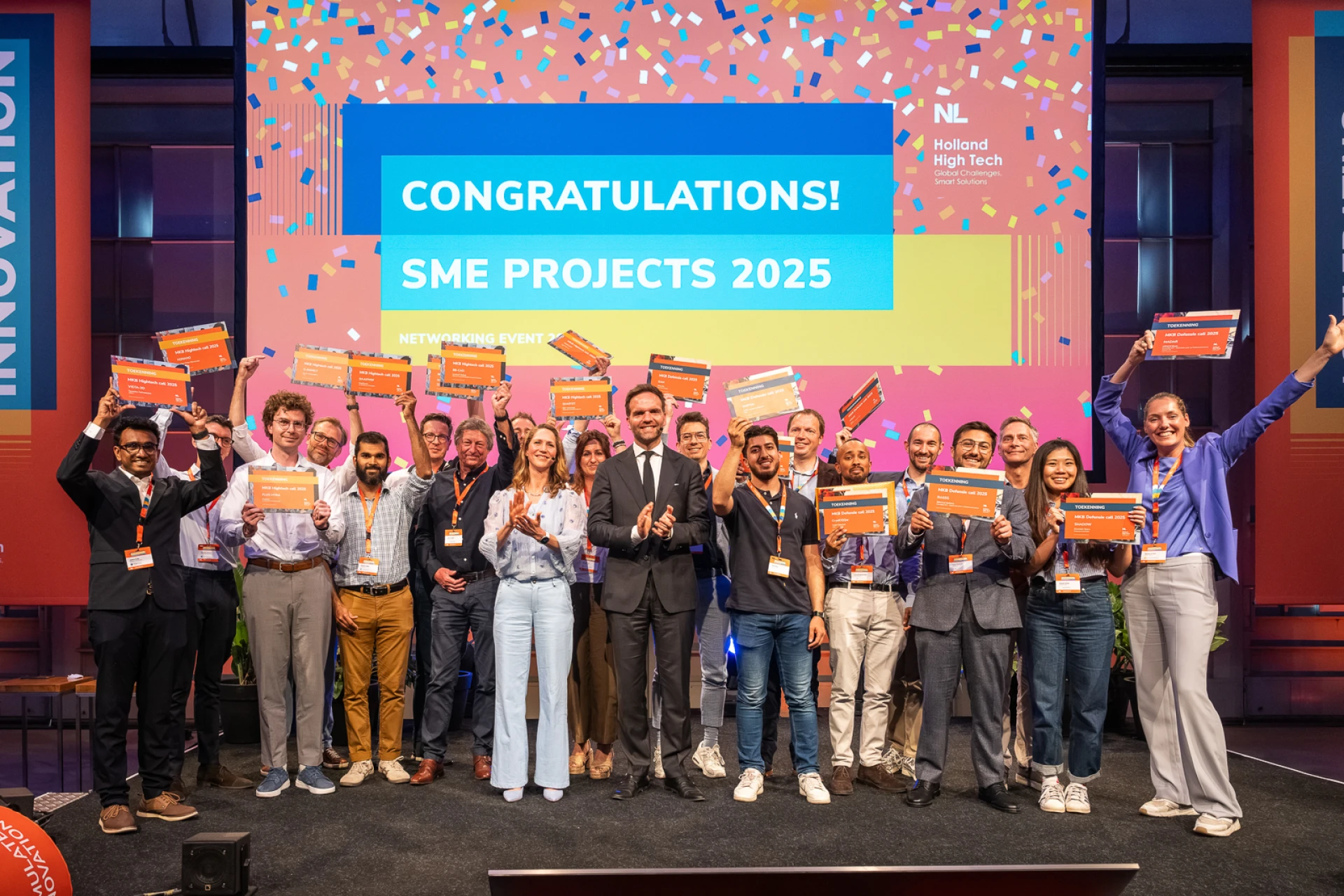
Presentation SME Hightech & Defense call projects

Esther Kersten, Founder and CEO of ImpactX and Board Member of Holland High Tech, joined the stage to put the spotlight on SMEs and the results of the SME calls. Her belief is straightforward: the high-tech sector is the engine of a healthy economy, and SMEs are at its heart.

"I have a deep belief in the high-tech sector to build a healthy economy through innovation. SMEs are often, and for good reason, referred to as the engine of the Dutch economy."

Kersten praised the quality of the project proposals submitted through the SME calls, and underlined what makes the instrument valuable: it not only stimulates collaboration between SMEs and knowledge institutes, but also invests directly in the innovation capacity of companies.


Final Remarks

Peter Stolk and Leo Warmerdam ended the programme by looking ahead. Upcoming calls (including the new SME High-Tech call and the new HTSM NWO Semicon-focused call) were announced for the autumn. Leo Warmerdam called on the community to build strong consortia and actively reach out to one another.

"Collaborate, build strong consortia, and make sure that you find the proper level of funding for your initiatives."

Peter Stolk offered a final reflection on the day: a high-tech community that embraces both uncertainty and opportunity, and understands that sitting still is not an option.

"The action is in our own hands. Jump on the bandwagon. Be inspired by what you heard today. We ignite innovation and continue accelerating Dutch high-tech."

Live podcast sessions by IO+

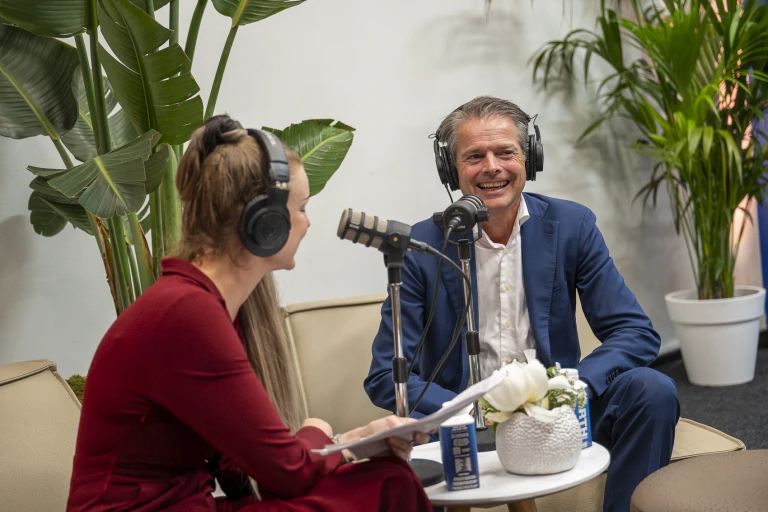
At the event, IO+ editor-in-chief Elcke Vels recorded a series of live podcasts with key voices from the Dutch innovation ecosystem. Each conversation capturing the urgency of the day: accelerating from strategy to execution. If you haven't been in this breakout, you can listen to the recordings of these episodes here. These will be published here in the coming weeks.

Talks coming up with:
▶ Lukas M. Ziegler | Robotics Evangelist & Keynote Speaker
▶ Tjerk Opmeer | Deputy Director-General for Business & Innovation, Ministry of Economic Affairs & Climate Policy
▶ Hans Büthker | CEO, Neways Electronics International


In other media

Click on the links for other publications on the Holland High Tech NETWORKING EVENT 2026, from reports to insights on specific topics.


Meld je aan voor onze nieuwsbrief