
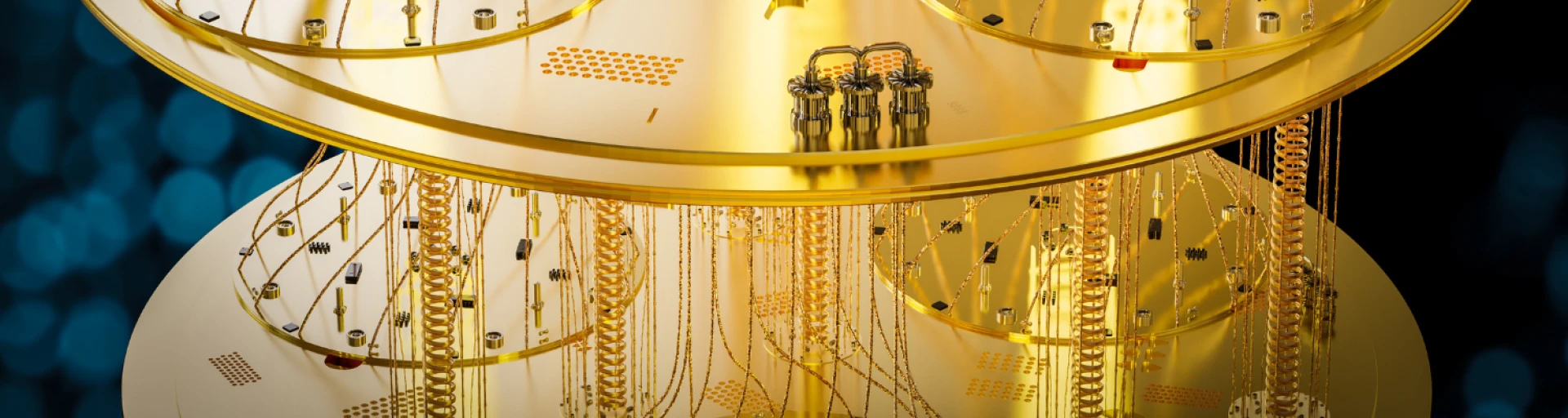
A quantum computer consists of much more than just a processor: cooling, cabling, control electronics, calibration, system software, compilers, monitoring and cloud access must all work together seamlessly. QuTech has built up this expertise through five generations of systems that have been made publicly accessible via Quantum Inspire, and through programmes such as HectoQubit/2 and OpenSuperQPlus. Leo DiCarlo will be Scientific Lead of the new unit, whilst Vivek Sinha will lead strategy and partnerships.
At the heart of the approach is an open architecture: by working with clearly defined interfaces, specialised technologies from different organisations can be combined. To this end, QuTech is collaborating with, amongst others, TNO, Qblox, QuantWare, Delft Circuits, Orange Quantum Systems, Peak Quantum and Riverlane. The unit aims to further establish Delft as a European hub for the integration of superconducting quantum systems, which also contributes to Europe’s ambition to build up its own quantum computing capacity.
Research and engineering reinforce one another
System integration provides a direct link between scientific research and the construction of complete machines. Research from the DiCarlo Lab – for example, into reducing leakage between quantum states, optimising adjustable couplings between qubits and analysing error sequences in operational processors – can be directly applied to new systems. Conversely, the practical experience gained through the publicly accessible Quantum Inspire platform in turn yields insights that only become apparent once a machine has been in use for an extended period.
From knowledge to commercial activity
The new unit is initially being funded by QuTech Business Development, but it is not a stand-alone initiative: it builds on years of national and European investment in Delft. For example, the development of this system integration capability received support at an early stage from QDNL’s CAT-1 quantum computer programme, NWO and Holland High Tech. Europe also contributed: through the EU’s OpenSuperQPlus programme, part of the EU Quantum Flagship, QuTech gained further experience in building and integrating superconducting quantum systems.
This combination of knowledge and resources now forms the foundation for the new unit. The coming year will focus on two key areas: the team will develop a repeatable blueprint for system integration and build a strong IP position, whilst conducting a market study to identify where this capability is most valuable to clients and partners. In doing so, various commercial avenues will be explored, such as turnkey integration projects, integration as a service, open-architecture quantum computers for HPC and research infrastructures, and services relating to operations and computing time. These findings should pave the way for the establishment of a separate company in 2028.
"What is happening here now is exactly what we in the Netherlands are good at. Not a single company building everything itself, but a chain of strong Dutch companies developing innovations to make a full-stack superconducting quantum computer possible. In 2018, Holland High Tech signed an agreement with QuTech for funding through a public-private partnership. Even then, it was already clear what the potential of quantum technology would be for our high-tech sector. Developments are now following in rapid succession, and we in the Netherlands, with our strong quantum ecosystem, are ensuring that we are not only participating but also helping to shape the global leadership in this technology."
Leo Warmerdam, Managing Director of Holland High Tech