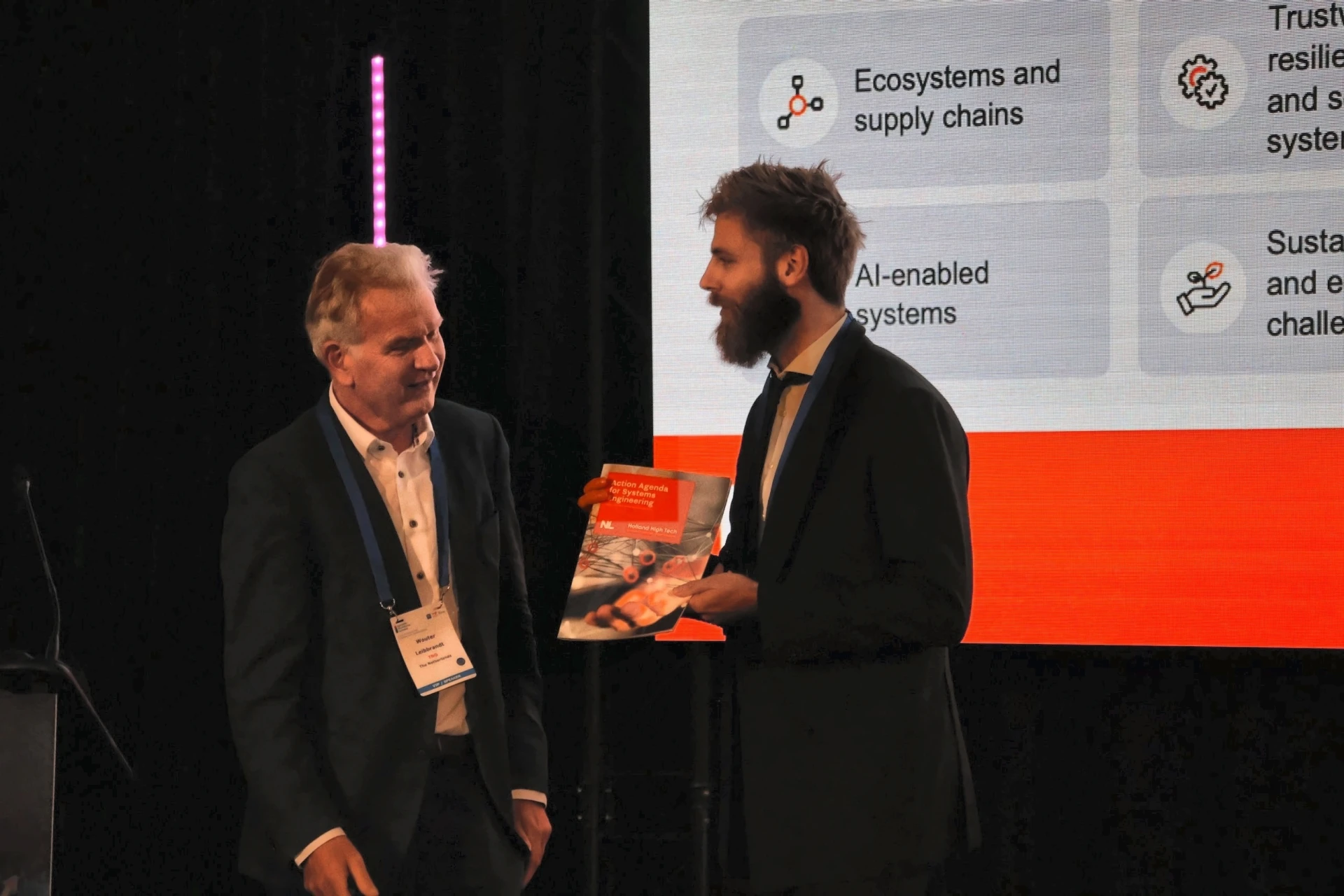
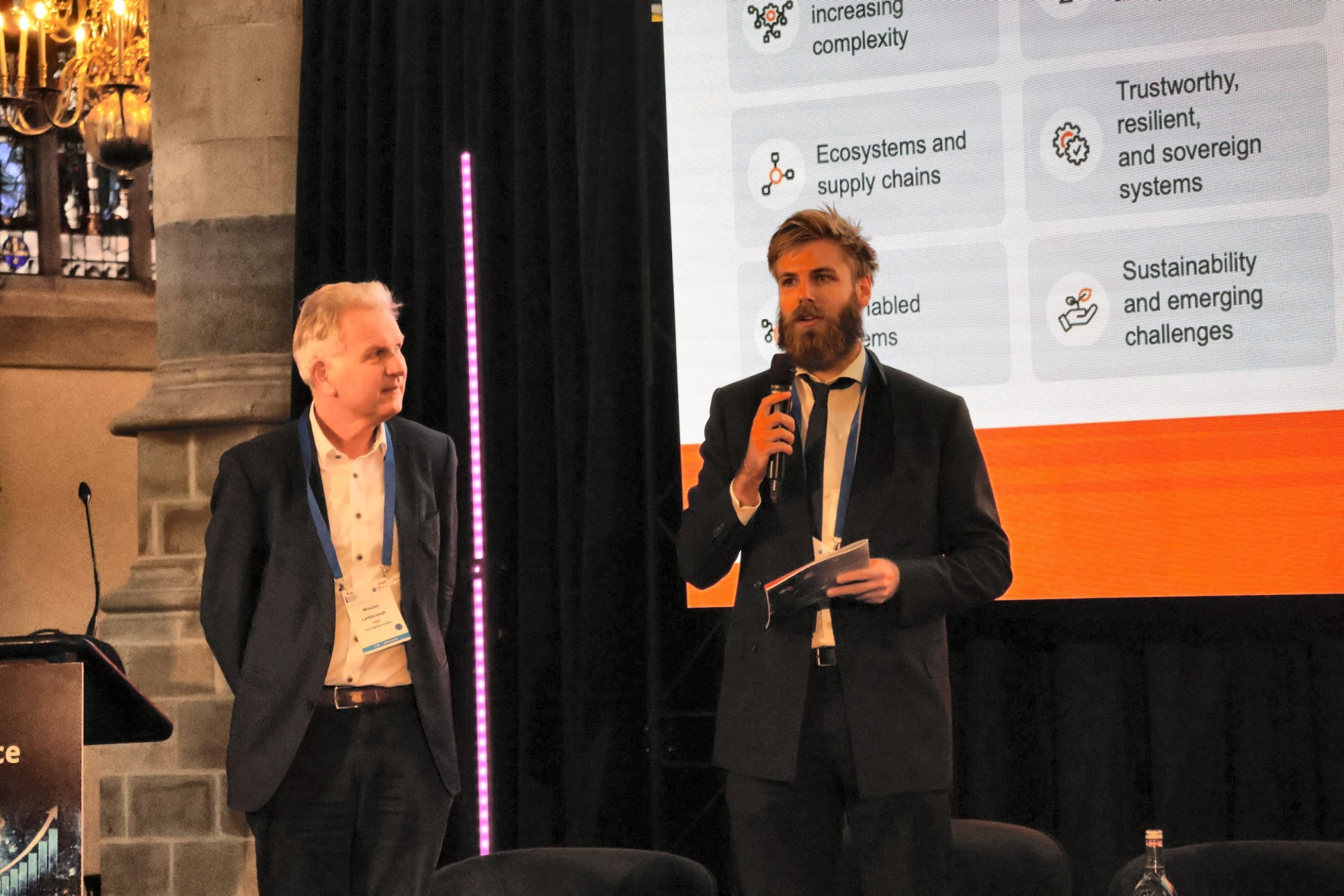
Global competition, geopolitical pressures and the climate transition call for greater engineering productivity and coordinated innovation. The agenda demonstrates and emphasises that the discipline of Systems Engineering (SE) helps to make this possible. From semiconductors and quantum technology to energy materials and biomolecular technology, all ten key technologies identified in the NTS are developed within and applied in complex systems. SE is therefore a prerequisite for the successful deployment of key technologies. The development and application of SE is also a key factor for the targeted programmes of the Ministry of Economic Affairs and Climate Policy, including those in High-Tech Mechanical Engineering.
The presentation took place during the Special Netherlands Session of the Systems Workforce Summit. In this session, themed ‘Scaling Systems Capabilities in a High-Tech Economy: The Netherlands as a Living Lab’, the Netherlands demonstrated how it is developing systems capabilities at scale. Wouter Leibbrandt explained how the Netherlands continues to lead the way in SE to safeguard its earning capacity and sovereignty.
Three priorities, five challenges and twelve lines of action
The Netherlands is well-positioned in the development of complex systems. To build on this position, the agenda identifies five challenges that are typical of the Dutch ecosystem, such as the shortage of systems architects, the fragmentation of the SME landscape and the tension between sovereignty and open innovation. For each of these, the agenda demonstrates how SE can play a unifying role.
The agenda focuses on three complementary priorities, set out in twelve action lines with specific measures for the short, medium and long term:
SE Method Innovation
New methods for complexity, digital engineering, supply chain collaboration, trustworthy and sovereign systems, AI-enabled systems and sustainability.
A single common framework
The agenda is intended to serve as a framework for future investment programmes, collaborative initiatives and implementation roadmaps. It invites industry, research institutions, government and professional bodies to organise their SE initiatives around these three priorities.
This agenda stems from a broader consultation by Holland High Tech. The innovation domains and the relevant innovation councils that can contribute to the development of the NTS’s key technologies, have been asked to draw up an agenda setting out how they can make a difference to the Dutch high-tech sector, in line with the NTS and the targeted programmes set out in the Parliamentary Letter on Focused Industrial Policy (October 2025). In that letter, the government has opted for a targeted strengthening of six markets: semiconductors, biotechnology, defence-related applications, digital services (particularly AI), mechanical engineering and innovative chemistry.
For the Systems Engineering domain, this Action Agenda sets out the details. In particular, the agenda ties in with the targeted Mechanical Engineering programme: Systems Engineering is the discipline that brings together mechanics, electronics, software and optics to form complex high-tech systems, thereby providing a foundation for the design, integration and industrialisation of machines and production equipment.
The Action Agenda for Systems Engineering was developed by Holland High Tech’s Systems Engineering Innovation Domain as an update to the 2020 SE Roadmap. A drafting team comprising INCOSE NL (International Council on Systems Engineering), the University of Twente, the European Space Agency, Sioux Technologies, Canon Production Printing, Utrecht University of Applied Sciences and TNO drew up the agenda; an advisory group comprising representatives from industry, research institutions and government reviewed the final document.