

Initiation of Fracture in Zinc-based metallic coatings
The soft and highly anisotropic zinc has poor mechanical properties which make it prone to surface damage during press-forming. Surface defects, as well as excessive surface waviness, are unacceptable for high quality products which require a perfect paint finish, e.g. exposed panels for the car industry, and hence lead to production waste. To enable “first-time-right” production for demanding press-forming applications and more sustainable paint systems, research is needed to improve the mechanical behaviour of zinc coatings.
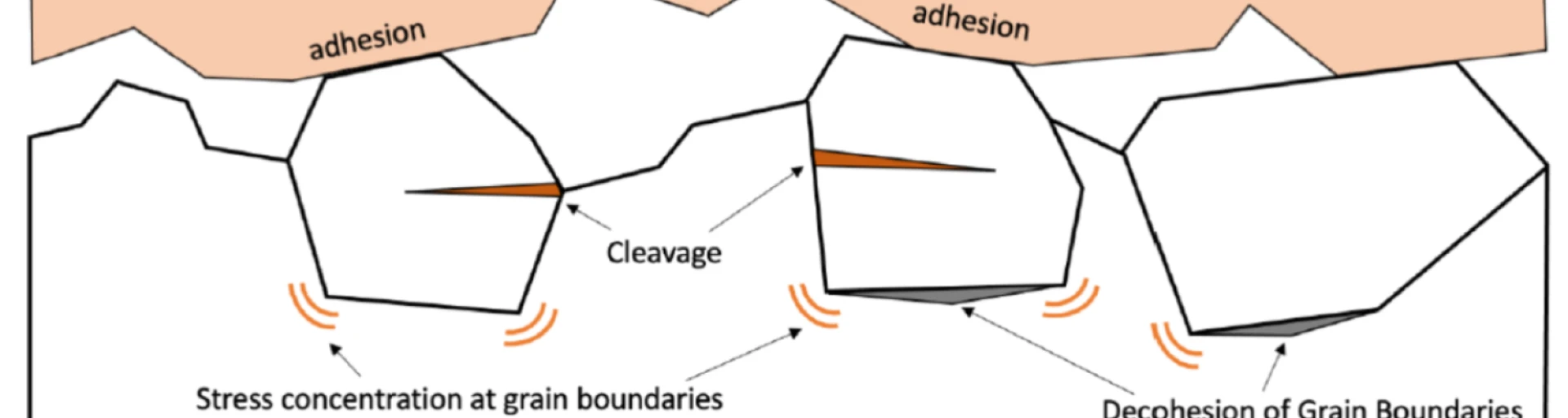
Wear of zinc coatings is due to micro-scale fracture of the zinc coating. Fracture resistance is enhanced by enabling plastic deformation while hindering crack propagation. In this project, we use a recently developed solute-strengthening model to screen zinc alloy compositions whereby enhanced plasticity is expected to occur by enabling multiple slip systems. Furthermore, we perform atomistic simulations to predict solute segregation at grain boundaries and surfaces and their impact on crack propagation. The proposed approach will therefore provide guidelines for identifying plastically deforming alloys that are resistant to brittle fracture and hence are suitable candidates for wear and corrosion-resistant coatings.