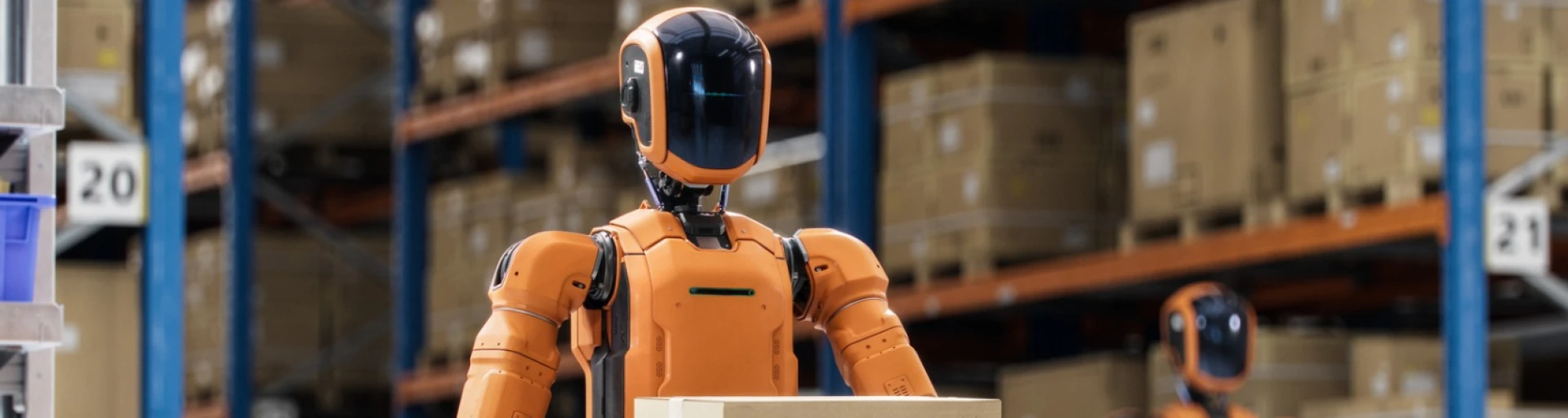
In their white paper ‘The Humanoid Hardware Value Chain’ (February 2026), Fraunhofer IPA and P3 Group estimate that global revenue from humanoid hardware could reach approximately 30 billion dollars by 2030. The researchers emphasise that, despite rapid advances in AI, the costs, reliability and scalability of humanoid robots are primarily determined by hardware: components such as hands, batteries and sensors do not yet fully meet industrial requirements in terms of robustness, service life and cost structure.
The researchers see a concrete opportunity here for European – and therefore also Dutch – machine builders and suppliers: the skills required for humanoid hardware, such as precision mechatronics, software that interacts with hardware, advanced production techniques and system integration, are closely aligned with the existing strengths of companies in the European manufacturing sector. It is precisely in complex production environments – such as those characteristic of the Dutch manufacturing sector, with high variety and relatively low volumes – that adapting cognitive robots is a complex task. The adoption of cognitive robots in these production environments presents a significant opportunity for the Dutch manufacturing sector, both for increasing its own productivity and for collaborating on the development of new technology and system integration within cognitive robotics.
From pilot to production: the first real-world examples
Development has now progressed beyond demonstrations at trade fairs. BMW reports in an official press release that a Figure 02 robot from the American company Figure AI helped produce more than 30,000 BMW X3s during a ten-month pilot at the factory in Spartanburg (US), by positioning sheet metal with millimetre precision for the welding process. According to trade publications such as Assembly Magazine, the robots operated in ten-hour shifts from Monday to Friday, totalling approximately 1,250 production hours and fitting more than 90,000 components.
Based on these results, BMW further developed the use of humanoid robots. In June 2026, the company reported in a follow-up press release that the successor model, Figure 03, had been deployed in Spartanburg for a new application: sorting and delivering parts in internal logistics (‘sequencing’), whereas previously individual components had been delivered unsorted. In addition, BMW is launching a pilot scheme involving humanoid robots at its factory in Leipzig (Germany) and has established a ‘Centre of Competence for Physical AI in Production’ to accelerate the deployment of AI and robotics in production worldwide.
Meanwhile, Mercedes-Benz is testing Apollo robots from the US firm Apptronik at the Berlin Digital Factory Campus and in production facilities, with a focus on the autonomous execution of defined sequences of movements. Logistics service provider GXO and Amazon are using Agility Robotics’ Digit robot for transport tasks in distribution centres, reportedly having moved more than 100,000 storage bins under a multi-year ‘robots-as-a-service’ agreement. Supplier Schaeffler – which holds a stake in Agility Robotics – is also deploying humanoid robots within its own global production network.
At the same time, it is important not to overstate the adoption of humanoid robots. The case studies mentioned above mainly concern clearly defined, repeatable tasks carried out by major manufacturers in the automotive and logistics sectors. The International Federation of Robotics (IFR) notes that, despite impressive demonstrations, the potential of humanoid robots in real production situations remains limited for the time being to demonstrators and pilot projects. For complex tasks in production environments characterised by high mix and low volume, the technology has not yet been proven or implemented on a large scale. The field is therefore still wide open, and this presents opportunities for the Dutch manufacturing industry, which excels precisely in these kinds of environments.
The geopolitical context
This development is not taking place in a vacuum. China has placed robotics at the heart of its industrial strategy in its five-year plan (2026–2030), with the aim of deploying AI primarily in physical applications, as the IFR also reports. This plan builds on guidelines published by the Ministry of Industry and Information Technology (MIIT) in November 2023, with the aim of making humanoid robots a key new driver of economic growth by 2027. According to an analysis by J.P. Morgan Private Bank, China accounts for approximately 75 per cent of both the humanoid and autonomous vehicle markets, driven by a deep manufacturing base, integrated supply chains and significant cost advantages.
For Europe and the Netherlands, this is a key reason why robotics is viewed not only as an operational choice, but also as an issue relating to productivity, innovation, earning power and strategic autonomy. This is a theme that also features in the Wennink Report.
Dutch answers
The Wennink Report ‘The Path to Future Prosperity’ (December 2025) identifies a Robotics Centre of Excellence and a Foundational Robotics Lab as concrete building blocks for strengthening Dutch expertise and industry in robotics, linked to broader investments in AI facilities, data centres and key technologies. Furthermore, in its Vector report, TNO advocates a national robotisation agenda with a central task force to oversee its implementation.
These calls are now being followed up with concrete action. In August 2026, the Ministry of Economic Affairs and Climate Policy and Holland High Tech announced that they, together with organisations including VDL Enabling Technologies Group, NXP, TNO, FME, Brainport Industries, NLRobotics and Brainport Development, are working on a single National Agenda for Cognitive Robotics (NACR). The agenda stems from the industry letter ‘Targeted Industrial Policy’ dated October 2025. It is explicitly not intended to establish a new strategy: the NACR builds on existing Dutch strengths in semiconductors, mechatronics, imaging, data and AI, and links these to European roadmaps and value chains. In addition to research institutions and industry, SMEs are also being involved in this process.